
Strong brands make more money. Weak brands compete on price.
 Most businesses believe they compete on product, service, or effort. In reality, they compete on perception. That perception is branding, and it has a direct impact on revenue, margin, and growth.
A strong brand creates value before a customer even engages. It signals credibility, builds trust, and reduces uncertainty. Customers approach with confidence, not hesitation. That shifts the conversation away from cost and towards outcome. Price becomes a factor, but not the deciding one.
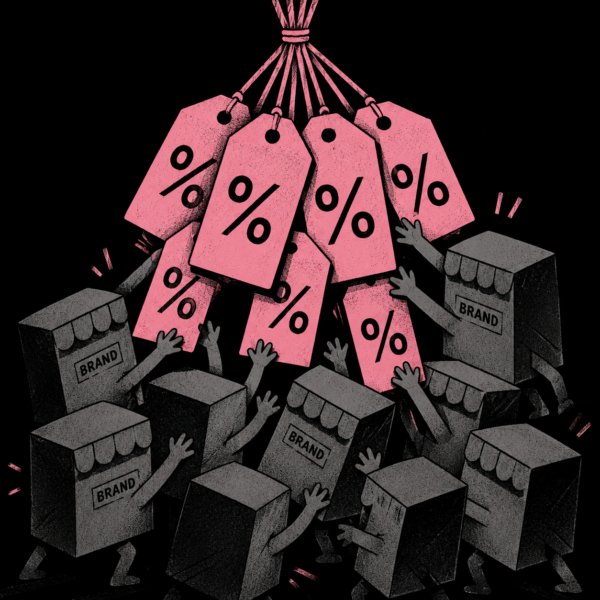
Weak brands operate differently. They rely on explanation and justification. Customers compare them side by side with competitors, looking for reasons to choose one over another. When no clear difference is visible, price becomes the default decision driver. This is where businesses start to feel pressure to discount.
Over time, this leads to commoditisation. When a brand lacks clear positioning or distinctiveness, it becomes interchangeable. Even if the underlying product or service is strong, the market does not perceive it that way. The result is a constant need to compete on price just to maintain volume.
Strong brands avoid this trap. They create separation in the mind of the customer. They make alternatives feel less relevant and reduce the need for comparison. This gives them pricing power and protects margin, even in competitive markets.
Brand strength also affects efficiency. A well defined brand shortens the sales cycle because trust already exists before the first interaction. Customers are more prepared to engage and more inclined to choose. This lowers acquisition costs and improves conversion.
Weak branding has the opposite effect. It extends the sales process, increases friction, and requires more effort to achieve the same result. These hidden costs accumulate over time and often go unnoticed, even though they directly impact profitability.
Branding is not a cosmetic layer applied at the end. It is a commercial asset that influences how a business is understood and valued. It amplifies strengths, clarifies positioning, and makes decisions easier for customers.
The distinction is straightforward. Strong brands are chosen with confidence. Weak brands are compared on price.
And over time, that difference determines who grows and who competes to survive.